
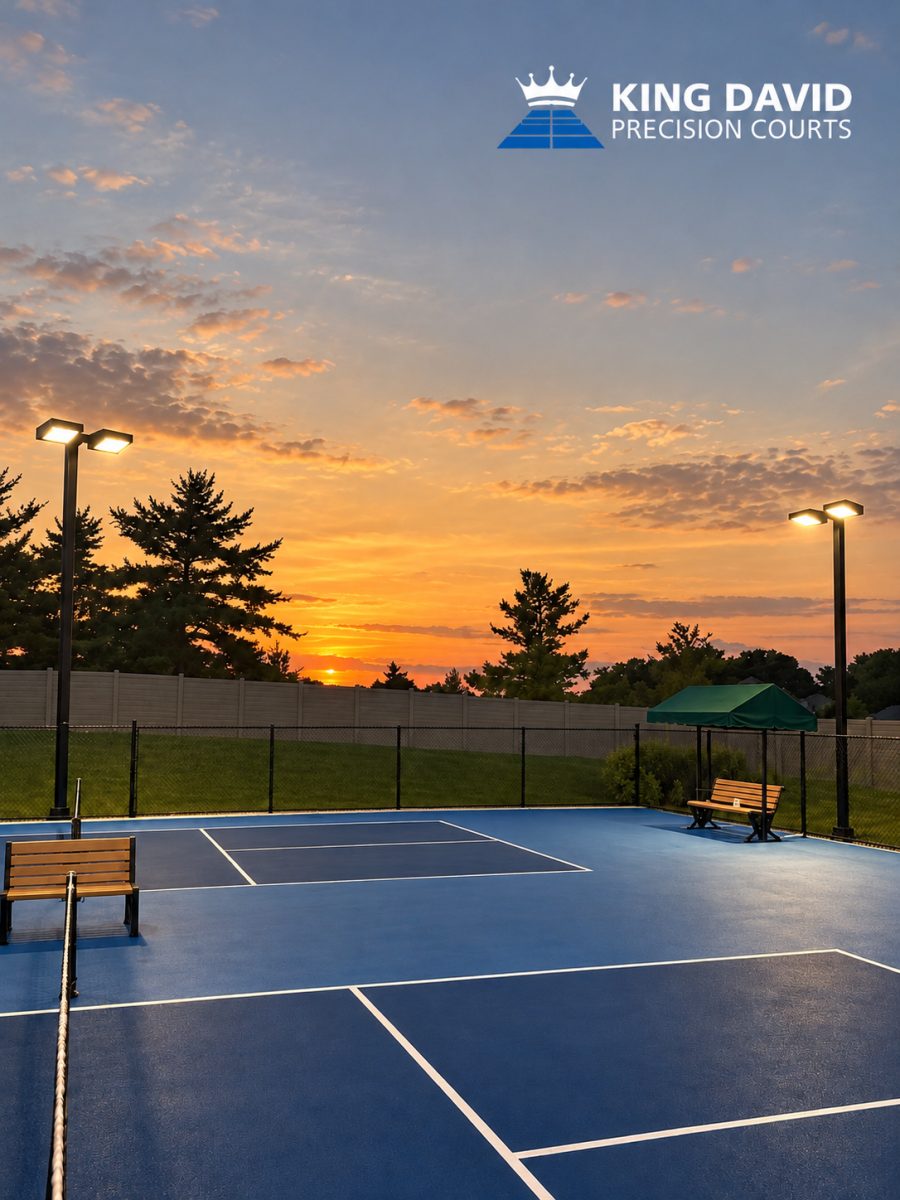
Poor Court Lighting Kills Playability — Here's How to Get It Right
You invested in a quality court surface, proper striping, and the right fencing. But when the sun goes down, none of that matters if your lighting leaves dark corners, harsh glare, or uneven coverage across the playing area. Poor lighting installation for sports courts is one of the most common oversights we see in Palm Beach County — and it's one of the most avoidable. Whether you're planning a new court build or upgrading an existing facility, this article walks you through what actually goes into a professional lighting setup, what questions to ask, and how to make sure your court is playable from dusk to late evening without compromise.
Why Court Lighting Deserves the Same Attention as the Surface Itself
Most property owners spend considerable time selecting the right surface system, planning drainage, and getting the layout right. Lighting often gets treated as an afterthought — something to figure out after the court is done. That approach creates real problems. Lighting that isn't planned alongside the court layout can result in pole placements that interfere with play, shadows that fall directly in key zones like the baseline or service box, and fixtures that create glare for players looking up at a lob or overhead shot. In Palm Beach County, where evening play is common year-round thanks to the climate, lighting isn't optional for most facilities — it's essential. Getting it right from the start means integrating the lighting plan into the overall court design, not bolting it on at the end.
What a Professional Lighting Installation Actually Involves
A proper sports court lighting installation is more than mounting a few fixtures on poles. It starts with a photometric analysis — a calculation of how light will distribute across the court surface based on fixture type, mounting height, pole placement, and beam angles. This analysis ensures you hit the right foot-candle levels for your court's intended use, whether that's recreational play, competitive training, or a multi-court facility with higher performance demands. Pole placement is critical and must account for both the court boundaries and any surrounding fencing or structures. Wiring runs need to be planned with conduit that meets local code requirements, and in many cases a permit is required before installation can begin. At King David Precision Courts, we handle the full scope — from the initial site review and photometric planning through permitting support, pole installation, wiring, and fixture mounting — so nothing gets missed and the finished result performs the way it should.
LED vs. Traditional Fixtures: Making the Right Choice for Your Court
If you're building or upgrading a court in Palm Beach County today, LED sports lighting is the clear choice for nearly every application. LED fixtures deliver significantly better light quality than older metal halide or high-pressure sodium systems, with more consistent color rendering that makes the ball and court lines easier to see during play. They also consume far less energy, which matters when lights are running several hours a night across a season. LED systems reach full brightness instantly — no warm-up period — and they last considerably longer than traditional fixtures, reducing long-term maintenance costs. For HOA communities, municipal parks, and private facilities where operating costs are a real concern, the efficiency advantage is substantial. The upfront cost of quality LED fixtures is higher than older alternatives, but the total cost of ownership over five to ten years almost always favors LED by a wide margin.
Local Considerations for Palm Beach County Court Lighting Projects
Palm Beach County has specific permitting and code requirements that affect sports court lighting projects, and working with a contractor who understands those requirements saves time and prevents costly rework. Light spillage onto neighboring properties is a common concern in residential communities, and some municipalities have restrictions on pole height or fixture brightness. Dark sky ordinances in certain areas may require shielded fixtures that direct light downward rather than outward. Beyond code compliance, the local environment matters too. Coastal humidity, salt air in areas closer to the water, and Florida's intense sun exposure all affect fixture selection and mounting hardware. Choosing fixtures and hardware rated for these conditions extends the life of your installation and reduces the chance of corrosion or premature failure. These are details that a general contractor may overlook but that a specialist in sports court construction takes seriously from day one.
The Right Lighting Makes Your Court Usable Every Hour You Need It
A well-lit court isn't just more functional — it's safer, more enjoyable, and more valuable to the people who use it. Whether you're planning a new build or retrofitting an existing court, lighting installation deserves the same level of precision and planning as every other element of the project. At King David Precision Courts, we bring that same attention to detail to every lighting project we take on across Palm Beach County and throughout Florida. When the sun goes down, your court should still perform. We make sure it does.
Frequently Asked Questions
How many foot-candles do I need for a tennis or pickleball court?
For recreational play, most courts perform well in the range of 30 to 50 foot-candles at the surface level. Competitive or training facilities often call for higher levels, typically 50 to 75 foot-candles or more depending on the sport and player level. A photometric analysis during the planning phase will determine the right target for your specific court and usage.
Do I need a permit for sports court lighting installation in Palm Beach County?
In most cases, yes. Electrical work and pole installation typically require permits under Florida building code, and Palm Beach County municipalities may have additional requirements. King David Precision Courts provides permitting support as part of our turnkey process, so you don't have to navigate that on your own.
Can you add lighting to an existing court, or does it only work for new builds?
Lighting can absolutely be added to an existing court. The process involves a site review to assess pole placement options, existing electrical infrastructure, and any code considerations specific to your location. Retrofitting an older court with modern LED fixtures is one of the most cost-effective upgrades a facility can make, and it significantly extends the usable hours of the court each day.
Ready to Light Up Your Court the Right Way?
King David Precision Courts handles professional lighting installation for sports courts across Palm Beach County and all of Florida. From photometric planning and permitting to pole installation and final fixture setup, we manage every detail so your court performs after dark just as well as it does in daylight. Call us at (561) 221-7303, email David@kingdavidprecisioncourts.com, or visit us at 5445 NW 106th Dr, Coral Springs, FL 33076 to get started.