
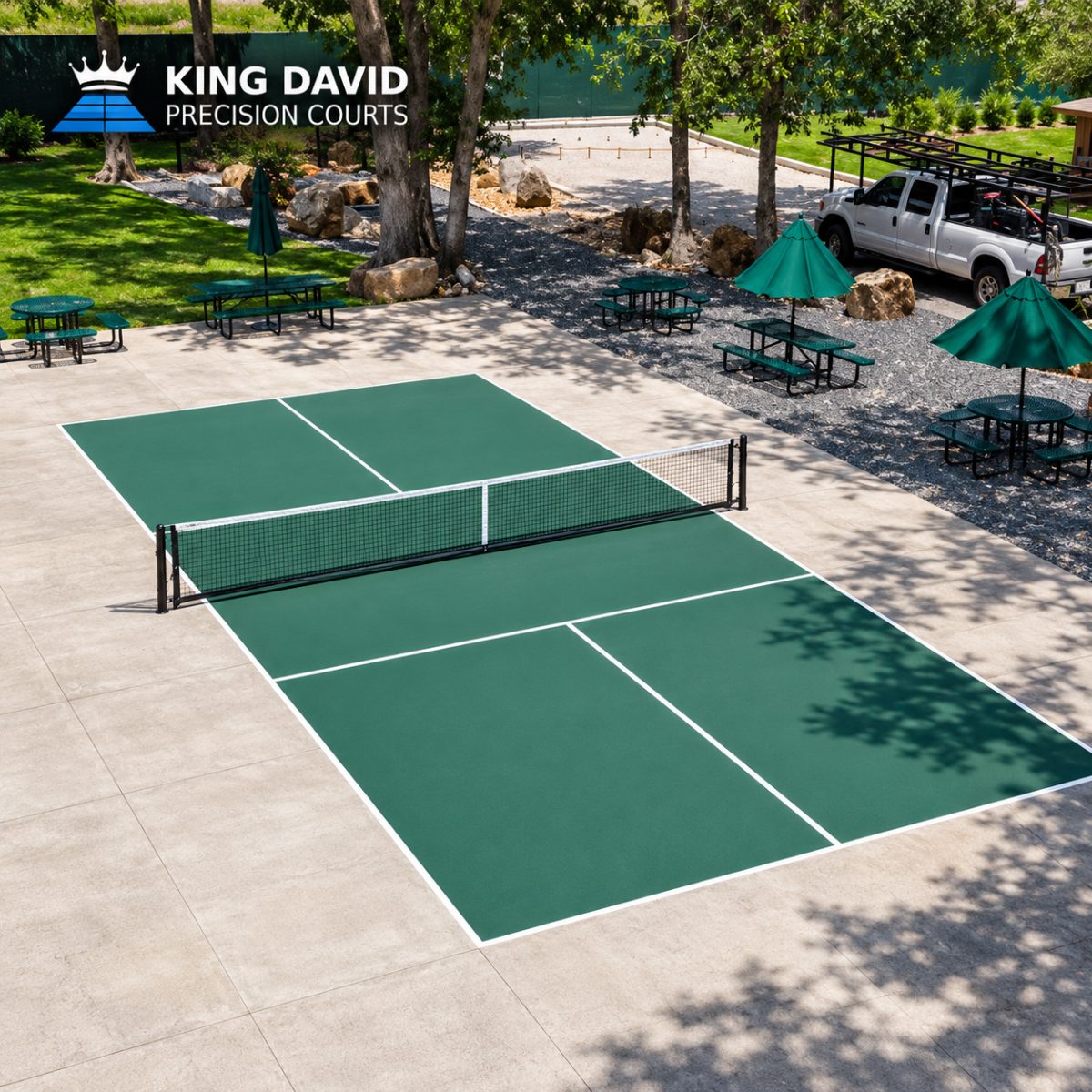
What a Well-Planned Court Build Actually Looks Like
A pickleball court is a long-term investment, and the difference between a court that plays well for years and one that develops problems early often comes down to decisions made before construction ever begins. If you are an HOA board member, homeowner, school administrator, or property manager planning pickleball court construction in Palm Beach County, this guide walks through the build process step by step so you know what to expect and what to watch for. Follow it in order, and you will be in a much stronger position to end up with a court that performs the way it should.
Start with a Proper Site Evaluation, Not a Guess
Every successful court build in Palm Beach County starts with a thorough look at the site itself. South Florida's flat terrain, high water table, and heavy seasonal rainfall mean that drainage is not optional, it is foundational. A professional site review should assess existing grading, soil conditions, proximity to drainage paths, and how water will move off the court surface after a storm. Skipping this step is one of the most common reasons courts develop puddling, cracking, or premature surface wear. Before any materials are chosen, the site should be evaluated by a team that understands how Florida heat, humidity, and rain cycles affect court longevity.
Choose a Surface System Based on Use, Not Trends
Once the site is understood, the next decision is surface type. Asphalt, concrete, and cushioned surface systems each offer different performance characteristics, and the right choice depends on how the court will be used, who will be using it, and the budget available. A municipal park with heavy daily traffic has different needs than a private residential court or an HOA amenity used mainly on weekends. Cushioned systems can offer a different playing feel than traditional acrylic-coated asphalt or concrete, but the best option should be recommended only after your usage patterns and budget are discussed, not selected off a general preference. This is a step where rushing to a decision early often leads to regret later.
Plan Layout, Fencing, and Lighting Before Pouring Anything
Court dimensions, orientation, and spacing matter for both play quality and compliance with HOA or municipal requirements. CAD drawings and site layouts help property owners and boards visualize the finished project and support the permitting process, which is required for most new construction and many resurfacing projects across Palm Beach County and Broward County. This is also the stage to decide on fencing for ball containment and safety, lighting for extended evening play, and any court coverings if shade or weather protection is a priority. Handling these elements together, rather than as afterthoughts, helps avoid change orders and delays once construction is underway.
Build the Base, Surface, and Striping in the Correct Sequence
With planning complete, construction moves through a defined sequence: base preparation and grading, surfacing installation, acrylic coating application where applicable, and finally professional striping for pickleball, and often multi-sport lines if the court will serve more than one use. Each phase depends on the one before it being done correctly. A rushed base leads to surface issues down the line, and inconsistent coating application can affect how the ball bounces. Property owners should ask their contractor about how each phase is sequenced and inspected before moving to the next, since this is where quality is either built in or compromised.
Do a Final Walkthrough Before Calling thePproject Complete
A turnkey build should end with a final walkthrough where the surface, striping, fencing, lighting, and any accessories like nets and posts are reviewed together. This is the time to confirm everything matches the agreed-upon plan and to ask questions about ongoing care. Florida's UV exposure and humidity make periodic maintenance important for keeping a surface performing well, so owners should leave this stage with a clear understanding of what upkeep looks like going forward, even if exact timelines for resurfacing needs depend on usage and site-specific conditions.
Getting it Right From the Start Pays Off
Pickleball court construction in Palm Beach County involves more decisions than most property owners expect, from drainage planning to surface selection to the sequencing of the build itself. Working through these stages in order, with a team that handles site evaluation, design, permitting support, construction, and finishing details together, is the most reliable way to avoid the costly mistakes that come from piecing a project together. Whether you are building for an HOA, a school, a municipal park, or your own backyard, a thoughtful process up front leads to a court that holds up to Florida's climate and everyday play.
Frequently Asked Questions
How long does pickleball court construction typically take in Palm Beach County?
Timelines vary based on permitting, site conditions, and project scope, so it is best to get a professional evaluation for a project-specific estimate rather than relying on a general timeframe.
Do HOAs need special permitting for a new pickleball court?
Most new court construction and many resurfacing projects require permitting through the local municipality, and HOAs often have their own architectural review requirements as well. Permitting support can be coordinated as part of a turnkey build.
What surface type is best for a Florida pickleball court?
There is no single best surface for every situation. Asphalt, concrete, and cushioned systems each perform differently, and the right choice depends on expected usage, budget, and site conditions, which is why a professional site review should guide the decision.
Start your pickleball court project with a professional evaluation
If you are planning pickleball court construction in Palm Beach County or anywhere across South Florida, King David Precision Courts can walk you through site review, design, permitting support, and turnkey construction from concept to final play.