
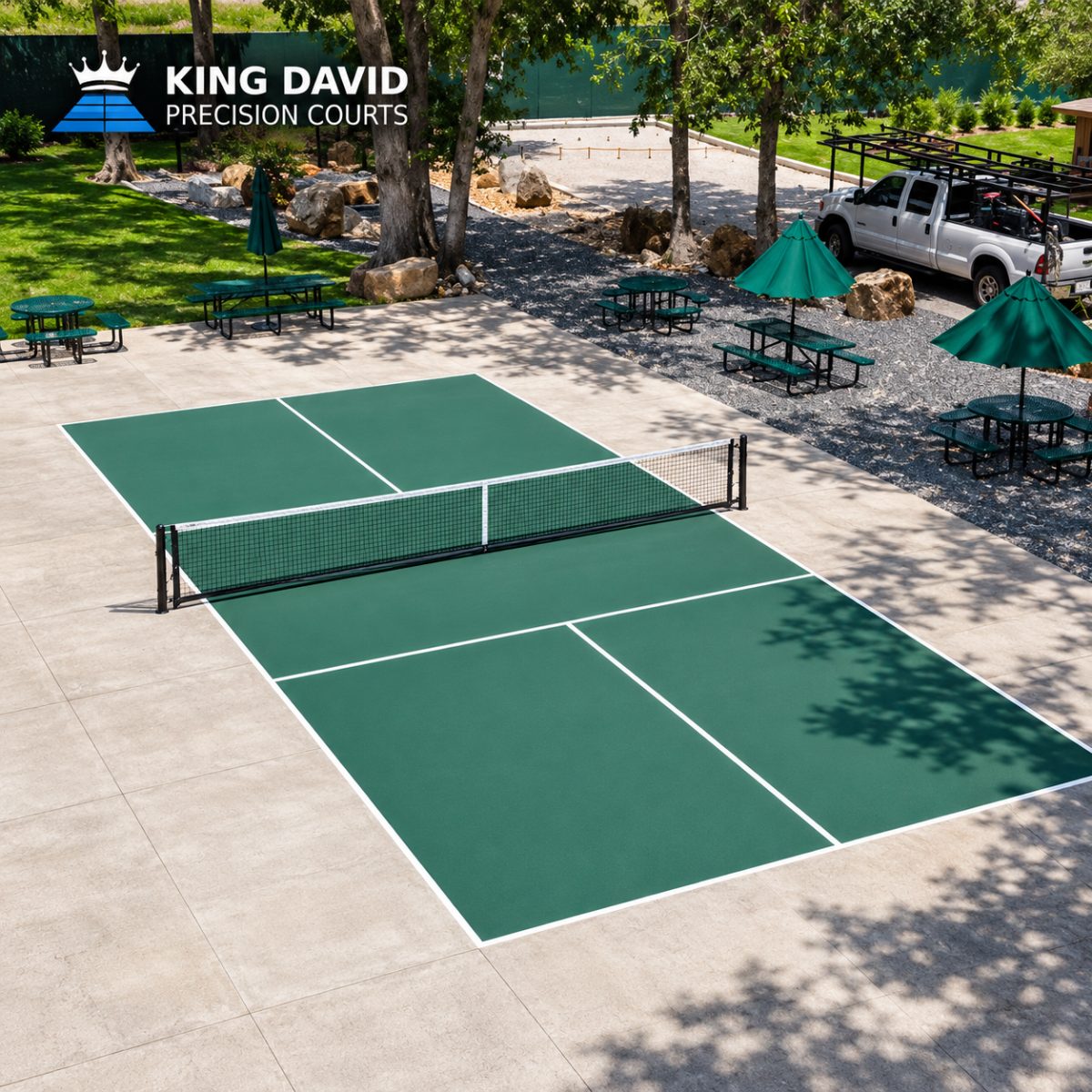
When One Extra Layer Changes the Whole Game
Picture an HOA board in Boca Raton fielding requests from residents who want a pickleball court added to the community amenities. Or a homeowner in Wellington converting part of a backyard into a private court for family and friends. Both face the same early question: should the new court use a standard acrylic hard-court surface, or is it worth paying more for a cushioned system? The answer depends less on trends and more on how the court will actually be used, who is playing on it, and what the property can support. This article walks through what cushioned pickleball courts are, how they compare to traditional hard courts, and how Florida conditions factor into the decision, so you can make a choice that fits your property rather than just following the latest surface fad.
What Is a Cushioned Pickleball Court, and How Does It Feel Different?
A cushioned pickleball court surface generally adds one or more resilient layers beneath the acrylic coating system, rather than applying color and texture coats directly onto bare asphalt or concrete. This additional layer is designed to change the playing feel underfoot compared to a standard acrylic hard court. Players often describe cushioned surfaces as feeling softer and more forgiving during extended play sessions, with a different sense of give when moving side to side or stopping quickly. Traction and ball response are still engineered into the surface through the acrylic topcoat and texture, so bounce consistency remains a priority on a properly built cushioned system. It is worth noting that cushioned surfaces change playing feel and comfort underfoot, but they are not marketed or installed as a medical or injury-prevention product. Any claims about joint comfort should be understood as a matter of personal preference and playing experience, not a guarantee.
Cushioned vs. Standard Hard Courts: Comparing the Tradeoffs
Standard acrylic hard courts and cushioned pickleball court systems each have a place, and neither is universally the better choice. In terms of playing feel, hard courts offer a firmer, more traditional response that many competitive players are used to, while cushioned courts offer more give and are often preferred for recreational and social play. Installation complexity tends to be higher for cushioned systems since additional layers must be applied correctly over a sound base. Maintenance expectations are generally similar for both systems, with periodic cleaning and recoating recommended over time, though cushioned systems may involve more attention to the added layers. Budget is also a factor, since cushioned systems typically involve a greater material and labor investment than a standard acrylic build. Property type matters too. A backyard court built primarily for family use may prioritize comfort and feel, while a municipal park court built for heavy daily traffic may prioritize durability and straightforward maintenance. An on-site evaluation is the best way to determine which system fits your specific court.
How Florida Weather and Existing Court Conditions Factor Into the Decision
South Florida communities from Delray Beach to Palm Beach Gardens deal with strong UV exposure, high heat, humidity, and heavy seasonal rainfall, all of which affect any outdoor court surface. Proper drainage planning, surface preparation, and quality acrylic coatings matter just as much for cushioned systems as they do for standard hard courts. A cushioned surface does not replace the need for a well-graded base and functioning drainage, since water that pools or surfaces that were not prepared correctly can shorten the life of either system. If you are considering adding a cushioned surface to an existing asphalt or concrete court, the base should first be evaluated for cracking, movement, low spots, or drainage problems. Not every existing court is a straightforward candidate for a cushioned overlay, and a professional inspection is the only reliable way to know what your court can support. For properties in Palm Beach County exploring this option, our team offers a dedicated evaluation process through our cushioned pickleball court installation in Palm Beach County services.
Cushioned Courts for Homeowners, HOAs, and Community Facilities
For a residential pickleball court, homeowners often choose a cushioned surface because the court is a personal amenity meant to be enjoyed over many years, and comfort and playing feel become a meaningful part of that investment. For HOA and community properties in Boynton Beach, West Palm Beach, and similar areas, the decision often comes down to usage frequency and long-term planning. A court used heavily throughout the week by residents of varying ages and skill levels may benefit from the playing feel a cushioned system provides, while a lower-traffic amenity court may be well served by a properly constructed standard surface. Appearance also plays a role, since community boards frequently want a court that looks sharp with clean striping and color as a visible amenity. Multi-court HOA projects add another layer of planning, since surface choice, drainage, lighting, and fencing all need to work together across the full site.
What Professional Installation Involves, and Is It Worth It?
A quality installation, cushioned or standard, starts with a full site evaluation, including inspection of any existing surface, crack and surface preparation where applicable, and a drainage assessment. From there, base preparation, surface system application, acrylic coatings, color selection, professional striping, and accessories like nets and posts are handled in sequence, followed by a final review before the court is ready for play. Whether asphalt or concrete is used as the structural base is a separate decision from whether the final surface includes a cushioned layer, since asphalt and concrete generally describe the base material while cushioning is part of the surface system applied on top. This means the asphalt versus concrete versus cushioned comparison is not always an either/or choice, it is a layered decision that should be discussed with an experienced pickleball court builder. So, is a cushioned court worth it? For properties that expect frequent use, value a premium playing feel, or want a standout amenity, it is often worth serious consideration. For other properties, a properly constructed standard court may be the more practical fit. The right answer depends on your property, your players, your existing court conditions, and your budget.
Choosing the Right Pickleball Court Surface in Palm Beach County
Cushioned pickleball courts are not automatically the better option, and standard hard courts are not automatically the budget compromise. Each system serves different priorities, and the right choice depends on how your court will actually be used, what your existing site conditions look like, and what your property and budget can support. Whether you are a homeowner planning a backyard court, an HOA board weighing a community amenity, or a facility manager planning a multi-court build, a proper site evaluation is the best starting point. Our team works across South Florida, including Palm Beach County communities like Boca Raton, Wellington, and Palm Beach Gardens, to help property owners compare surface options, plan drainage, and move from concept to a finished court.
Learn more: Cushioned Pickleball Court Installation – Palm Beach County.
Frequently Asked Questions
What is a cushioned pickleball court?
A cushioned pickleball court is a surface system that adds one or more resilient layers beneath the acrylic coating, creating a different underfoot feel compared to a standard hard court while still being engineered for consistent traction and bounce.
Can you put a cushioned surface over an existing concrete or asphalt court?
In some cases, yes, but the existing base first needs to be evaluated for cracking, movement, drainage issues, or low spots. Not every existing court is a suitable candidate for a cushioned overlay, so a professional inspection is necessary before moving forward.
Are cushioned pickleball courts worth the extra cost for HOAs?
It depends on the community's usage patterns and priorities. Courts with frequent, heavy use across many residents may benefit from the playing feel and comfort cushioned systems offer, while lower-traffic amenity courts may be well served by a properly built standard surface. An on-site evaluation helps clarify what makes sense for your property.
Let's Find the Right Court Surface for Your Property
Not sure which pickleball court surface is right for your property? Contact King David Precision Courts to discuss your court, playing needs, and surface options with an experienced team serving Palm Beach County and South Florida.